
What Is the Difference Between Eczema and a Fungal Skin Infection?
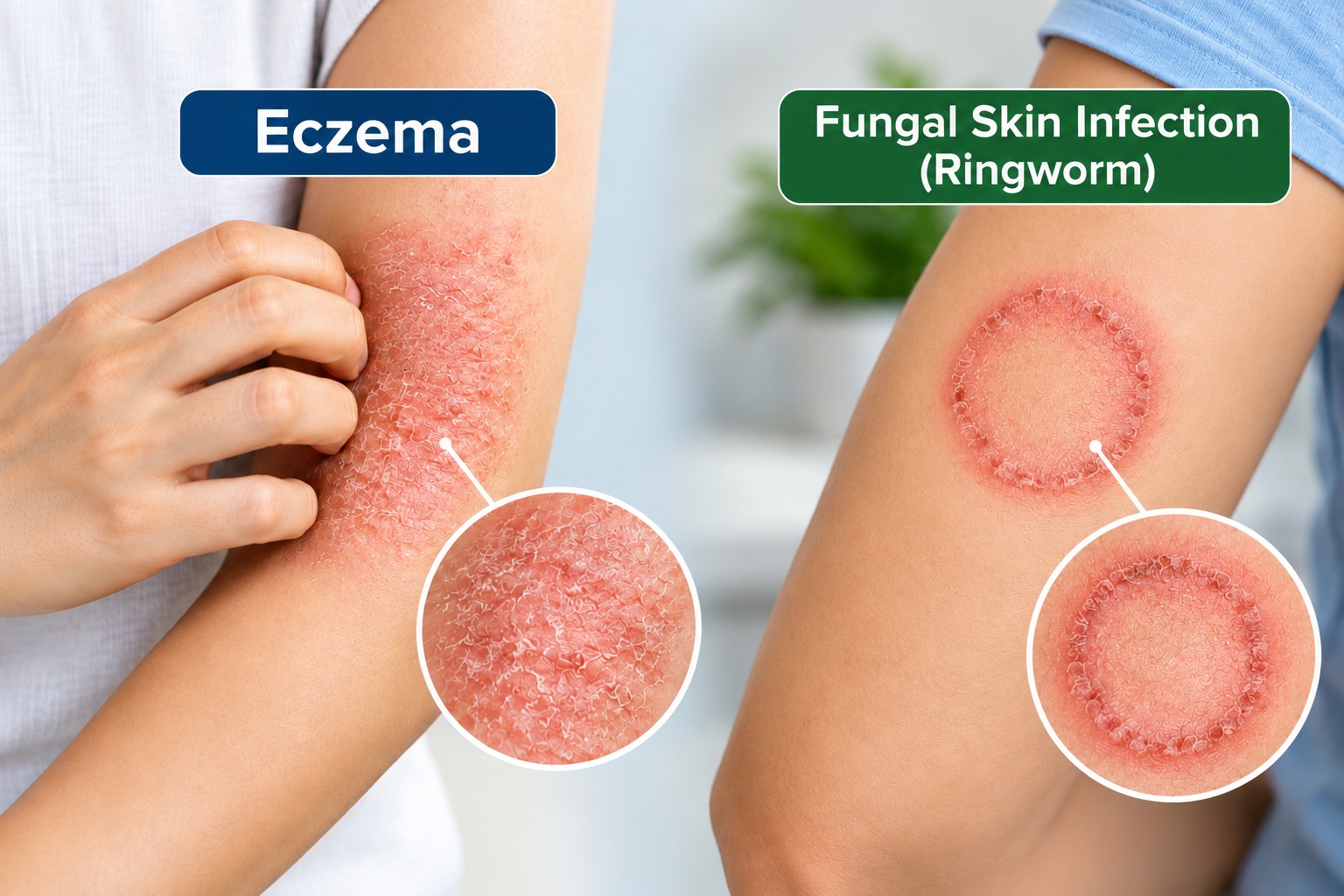
Recognize: An itchy, red patch on your skin can be confusing, especially when it spreads or keeps returning. Eczema and fungal skin infections often look similar, but their causes and treatments are different. Applying the wrong cream may delay recovery or make symptoms worse.
Eczema is an inflammatory skin condition, while a fungal infection develops when fungi infect the skin. Understanding their differences can help you recognise warning signs and seek appropriate care. If your rash persists, consulting a dermatologist in Wakad can help identify the cause.
What Is Eczema?
Eczema describes a group of inflammatory skin conditions that commonly cause dryness, itching, and irritation. Atopic dermatitis is one of the most common forms.
People with eczema often have a weakened skin barrier, allowing moisture to escape and irritants to affect the skin more easily. Genetics, immune responses, and environmental factors can contribute.
Eczema is not contagious and cannot spread through ordinary physical contact.
Common Symptoms of Eczema
Eczema may cause dry, rough patches, persistent itching, redness, or changes in skin color. Some people develop cracked skin, thickened areas, or occasional oozing during flare-ups.
It commonly affects the hands, neck, face, and skin folds, although symptoms can appear elsewhere.
What Is a Fungal Skin Infection?
A fungal skin infection occurs when fungi grow within the outer layers of the skin. Common examples include ringworm, athlete's foot, and jock itch.
Many superficial infections are caused by dermatophytes, fungi that grow in keratin-containing tissues.
These infections can spread through contact with infected people, animals, towels, clothing, or shared surfaces. Warm, humid environments may encourage fungal growth.
Common Symptoms of Fungal Infections
Fungal infections may produce itchy, scaly patches with a raised or more active border. Ringworm sometimes forms a circular rash with clearer skin towards the center.
Other infections cause peeling between the toes or irritation around the groin.
Not every fungal rash has a ring-shaped appearance, making diagnosis difficult based on appearance alone.
Eczema vs Fungal Infection: What Is the Main Difference?
The primary difference is the underlying cause.
Eczema develops because of inflammation and skin barrier dysfunction. Fungal infections occur when fungi infect the skin.
Eczema may appear as recurring dry patches, while some fungal infections gradually expand outward. However, both can cause itching, scaling, and changes in skin color.
A dermatologist considers the rash's appearance, location, and medical history before deciding whether testing is necessary.
Can Eczema Be Mistaken for Ringworm?
Yes. Nummular eczema can create round, coin-shaped patches resembling ringworm.
Fungal infections can also look unusual after steroid creams have been applied. Steroids may reduce visible inflammation while allowing the infection to continue spreading.
This altered presentation is sometimes called tinea incognito.
Avoid repeatedly using steroid-containing combination creams on an undiagnosed rash without medical advice.
How Does a Dermatologist Diagnose These Conditions?
Diagnosis begins with examining the affected skin and discussing your symptoms.
A dermatologist may ask when the rash started, whether it has spread, and which treatments you have already tried.
If a fungal infection is suspected, a small skin scraping may be examined using a potassium hydroxide (KOH) test to identify fungal elements.
Additional investigations may be recommended when the diagnosis remains uncertain or symptoms do not improve.
What Treatments Are Available?
Treatment depends on whether the condition is inflammatory or infectious.
Eczema Treatment
Eczema management focuses on restoring the skin barrier and reducing inflammation.
Regular moisturizing, gentle cleansing, and avoiding known irritants are important. Prescription anti-inflammatory creams may be recommended for flare-ups.
Fungal Infection Treatment
Fungal infections require appropriate antifungal medication.
Mild infections may respond to topical antifungal creams. Extensive, recurrent, or difficult-to-treat infections sometimes require oral medication under medical supervision.
A consultation at a skin care clinic in Wakad can help determine which treatment is suitable.
How Can You Prevent Recurring Skin Problems?
For eczema, moisturise regularly, avoid harsh soaps, and identify products or environmental factors that trigger flare-ups.
To reduce fungal infection risk, dry your skin thoroughly after bathing, change sweaty clothing promptly, and avoid sharing towels.
Breathable clothing can help reduce prolonged moisture around skin folds.
When Should You See a Dermatologist?
Consult a dermatologist if your rash spreads, repeatedly returns, or does not improve with appropriate care.
Painful swelling, pus, increasing warmth, or fever may indicate a secondary infection and require prompt medical attention.
Early diagnosis can help avoid unnecessary medication and complications.
Frequently Asked Questions
Is eczema contagious?
No. Eczema cannot spread between people. Certain fungal skin infections are contagious.
Can a fungal infection look like eczema?
Yes. Some fungal infections resemble eczema, particularly when their appearance has changed after using steroid creams.
Does every circular rash indicate ringworm?
No. Nummular eczema and other skin conditions can also cause circular patches.
Can both conditions occur together?
Yes. A person with eczema can also develop a fungal infection, so professional assessment may be needed.
Consult The Pune Skin Clinic for Skin Concerns.
Eczema and fungal infections require different approaches to treatment. Identifying the underlying condition is important when a rash persists or returns.
The Pune Skin Clinic serves patients in Wakad and Tathawade seeking assessment for itching, rashes, and other skin concerns.
Visit the contact page for consultation and appointment information.